





Precision 3D Bend Forming for Multi-Axis Aluminum Profiles
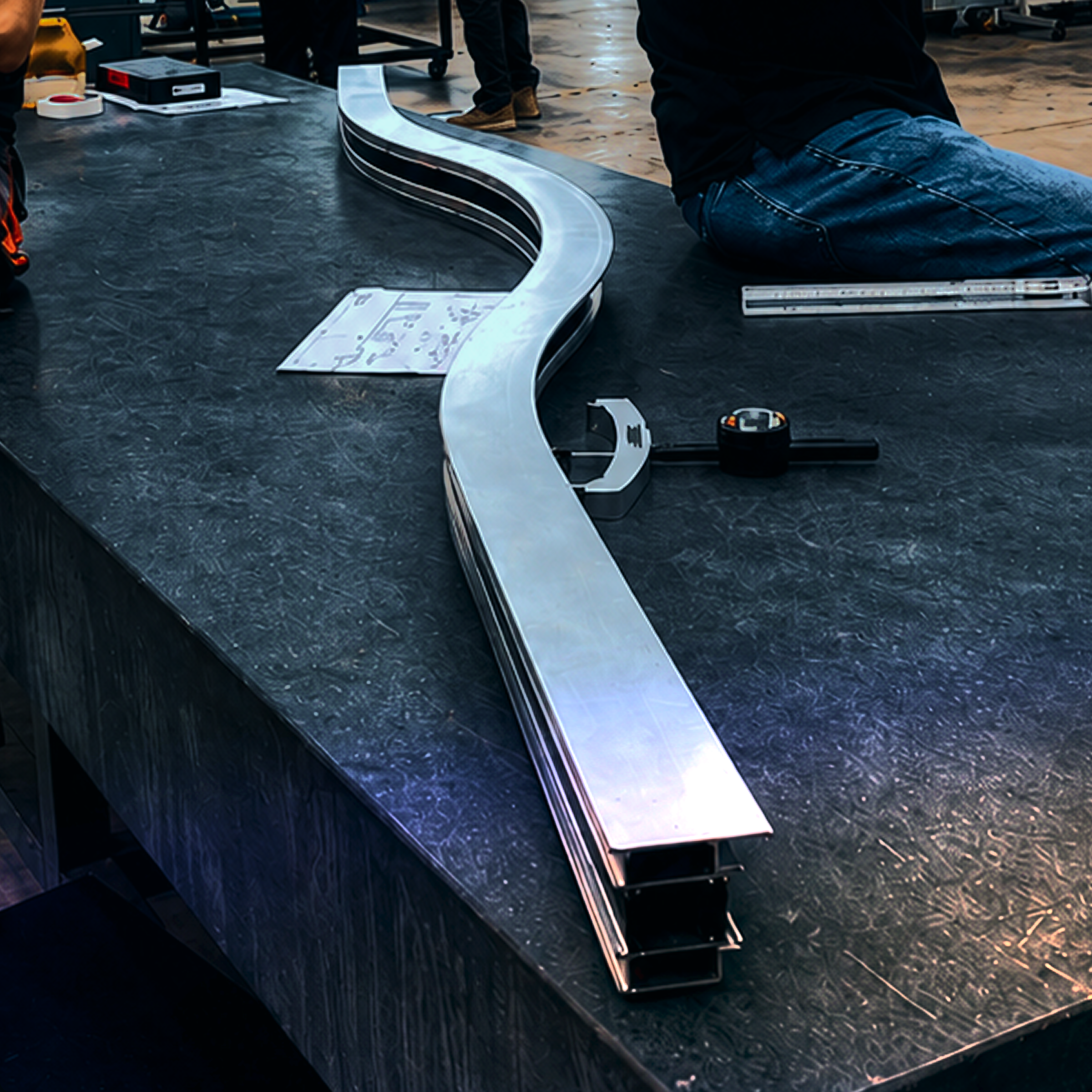
Alubend delivers 3D bend services for complex aluminum profile extrusions, tube bending, and pipe bending with CNC fabrication control, precision bending, and consistent bending radius across multi-plane components.

3D Aluminum Bending for Structural & Design Applications
Our 3D bend services for projects require tight control over geometry, bending radius, and part orientation across multiple planes.
Accordingly, our capabilities include:
- CNC-driven precision bending of aluminum profile extrusions
- Multi-directional tube bending and pipe bending with repeatable accuracy
- Complex profile forming for use in transport, structural, and design-based applications
- Consistent production results supported by controlled CNC fabrication systems
As a result, Alubend is able to form each part to match design drawings and specified tolerances.

Forming
Costs
Try Our Bending Calculator


All-In-One Solution
Alubend provides a comprehensive bending service, offering everything from design consultation to final product delivery, ensuring seamless execution for all your aluminum bending needs.

Quality Promise

Reporting
Alubend offers detailed, transparent reporting on every project, providing clients with clear insights into progress, specifications, and final outcomes for full confidence in our services.
Complex Profile Solutions for Architecture, Transit & Manufacturing
Because of our forming processes, our teams deliver:
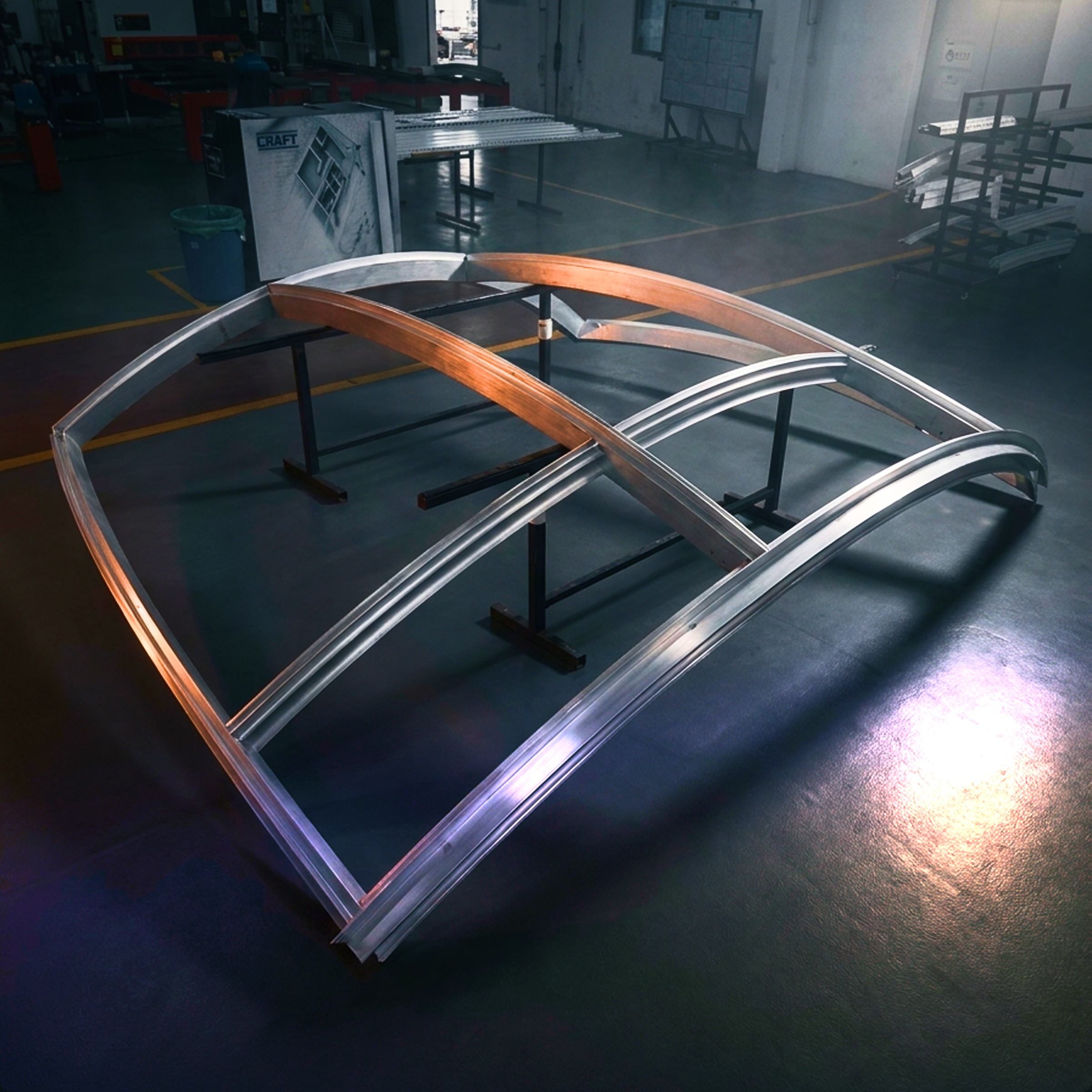
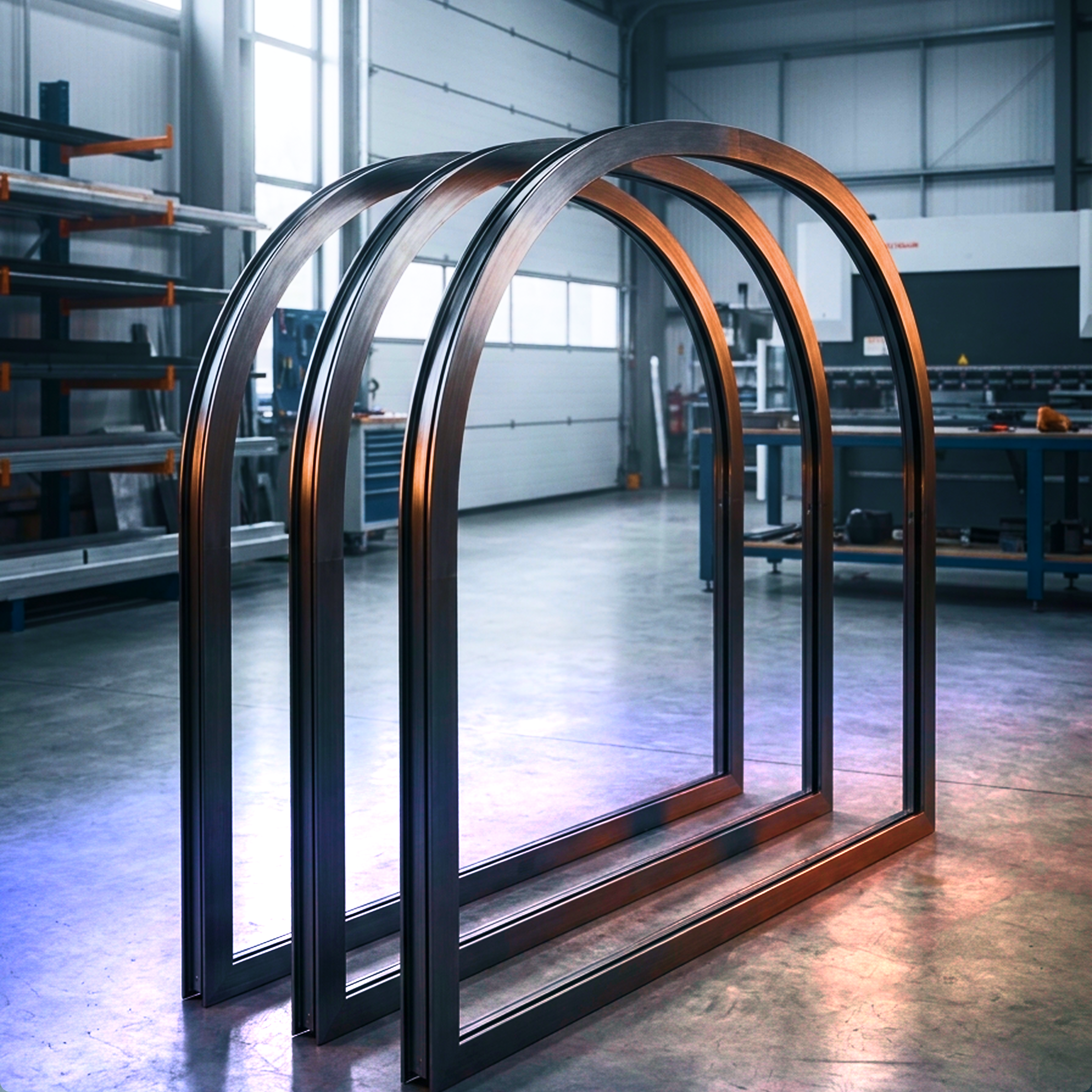
- Architectural systems that incorporate curved or twisted aluminum components
- Rail and automotive builds requiring bent extrusions with consistent geometry
- Structural frameworks where formed aluminum profiles replace cut-and-weld assemblies
- Product and interior designs that integrate freeform aluminum profiles into visible applications
For this reason, it reduces the need for segmented parts, on-site shaping, and additional welding steps.
Capabilities of Multi-Plane 3D Bend Systems
Significantly, our 3D forming technology supports advanced fabrication requirements.
But, in addition to that, these systems can offer:
- Controlled bending radius for accuracy in curved geometries
- High-precision shaping across multiple axes
- Single-piece forming to reduce joint count
- Repeatable CNC bending cycles for consistent production
- Material usage based on accurate cuts and minimal waste
- Geometric shaping suited for complex assemblies and spatial structures
As a result, Alubend forms every profile for direct use in manufacturing, construction, or installation environments.
CNC Fabrication for Multi-Axis Forming
Furthermore, Alubend uses programmable bending platforms designed for multi-axis control.
Our features include, but are not limited to:
- Simultaneous control of profile rotation, feed rate, and bending angle
- Shape simulation software to confirm accuracy before forming
- Tooling engineered to protect surface finishes during bending
- Digital file input for STEP, DXF, and IGES formats
With that, this workflow supports reliable shaping, which reduces manual rework or trial forming.
Our Works In Motion
This showcases our diverse aluminum bending projects, highlighting our precision and expertise in action.
Explore how we’ve delivered custom bending solutions across industries, bringing innovation and functionality to every design.



Frequently Asked Questions
Can different alloys and grades of aluminium be 3D Bent?
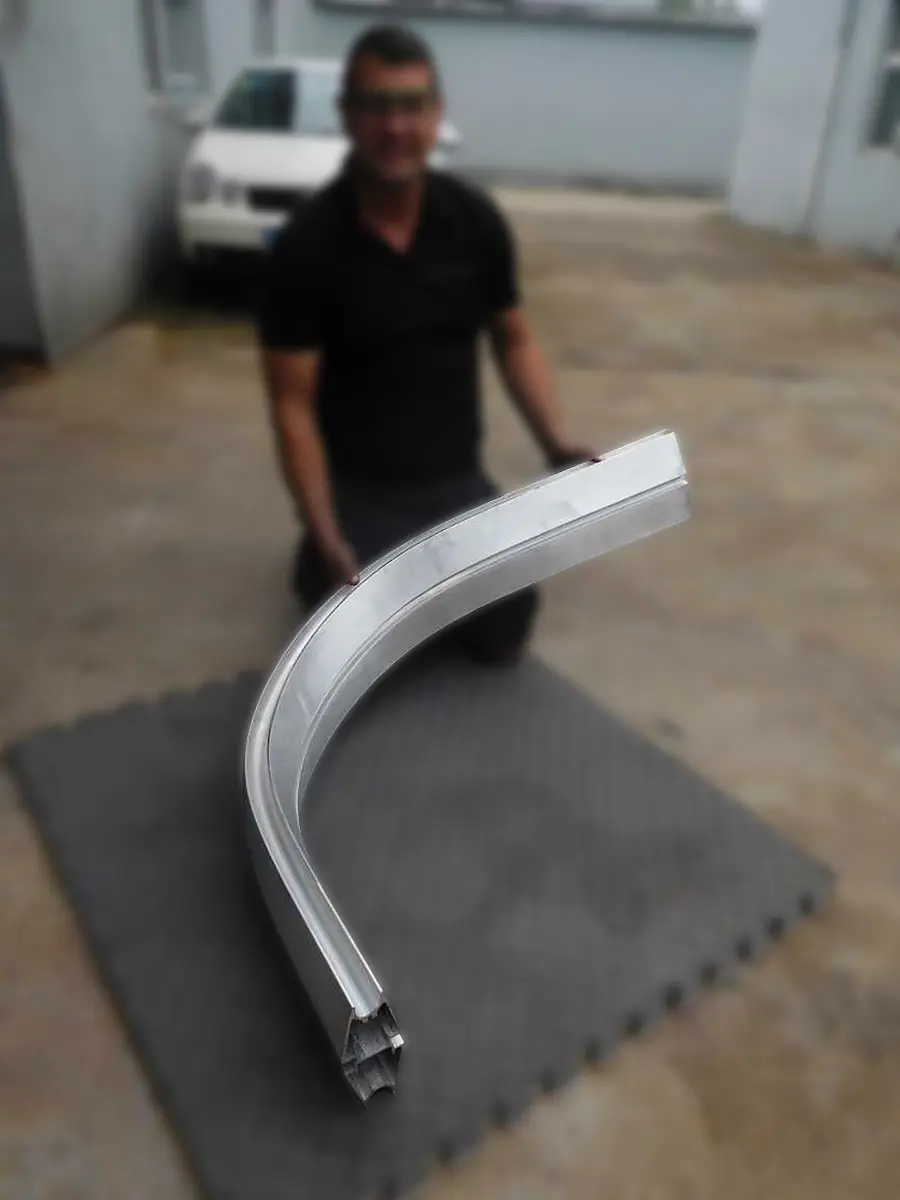
3D bending applies to various aluminum alloys and grades, depending on their ductility and elasticity, which affect bending ease and feasibility. Some alloys with better formability are ideal for complex bends, while others require precise temperature control, speed adjustments, or specialized tooling.
We determine the best parameters, tooling, and techniques to achieve high-quality results tailored to your specific aluminum materials and 3D bending needs.
In which industries is 3D bending commonly used?
3D bending is used in various industries to create curved profiles:
3D bending serves industries needing curved profiles.
Are there any design guidelines or recommendations to consider for 3D aluminium bending?
3D bending depends on the alloy’s ductility and elasticity, which affect bending ease. Choosing the right alloy is crucial for complex bends, with some requiring precise control or special tooling.
We optimize parameters and techniques to deliver high-quality results and guide you in selecting the best approach for your 3D bending needs.
 Previous