





CNC Aluminum Bending for Profiles, Tubes, and Extrusions
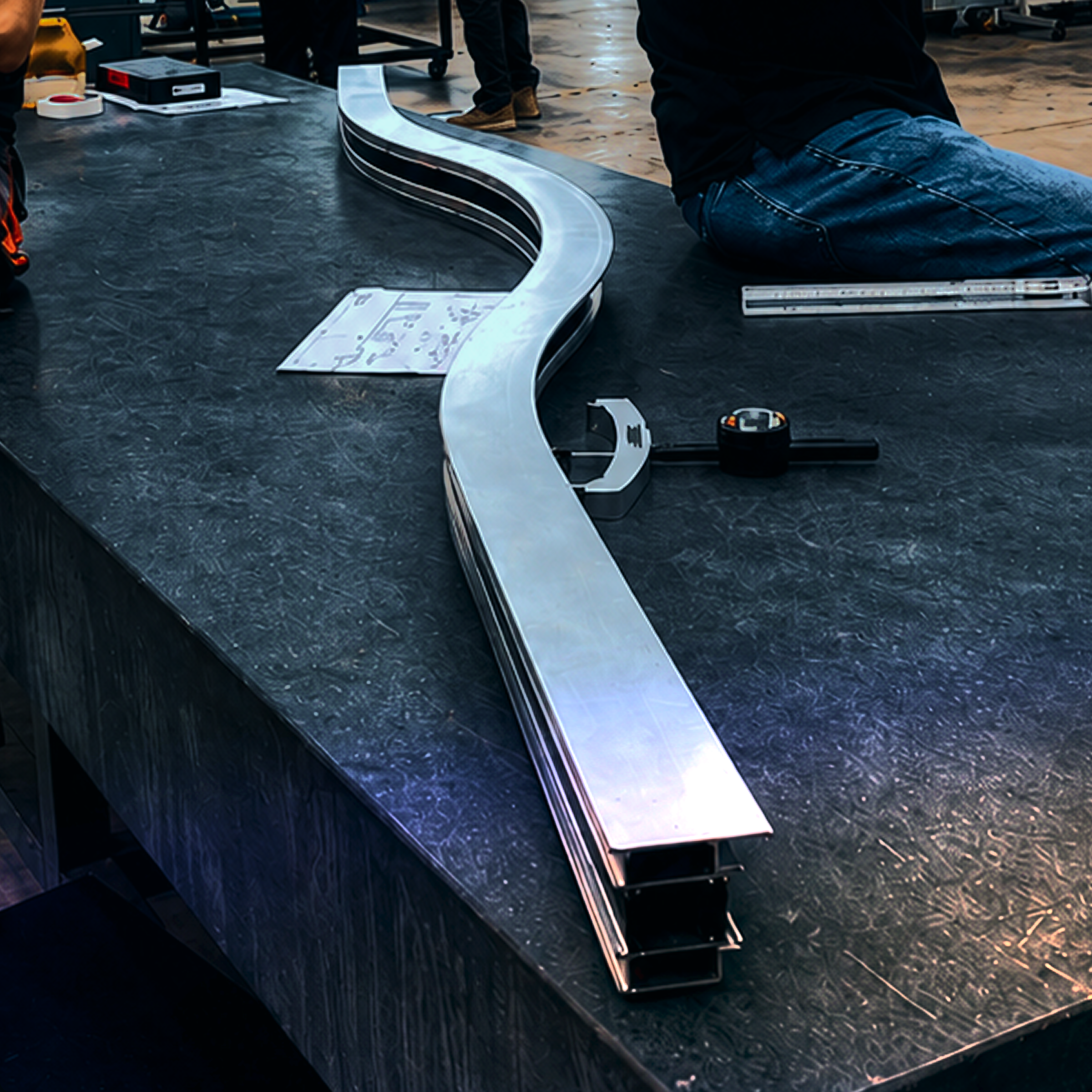
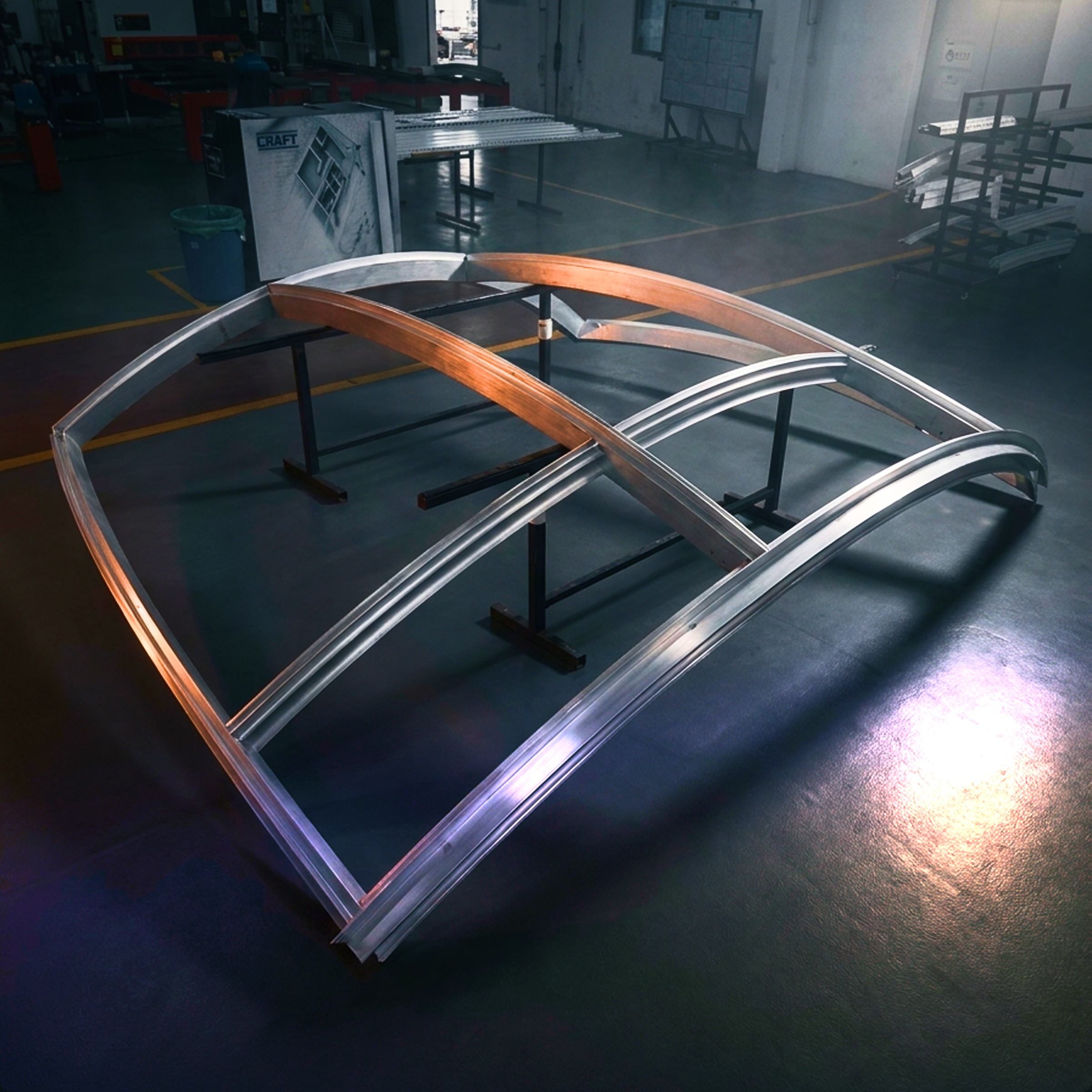
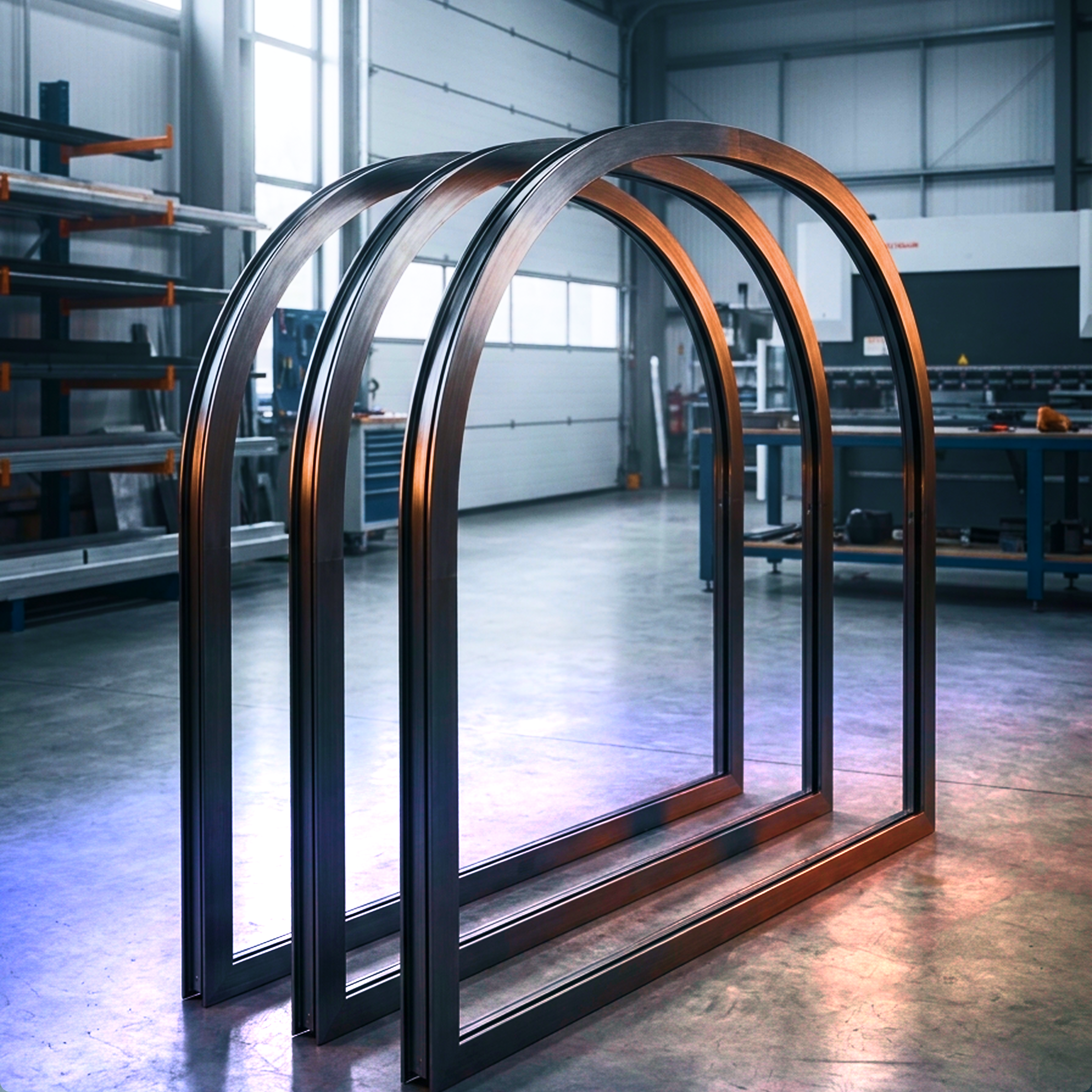
We deliver precision aluminum bending services that actively shape aluminum profiles, sheets, extrusions, and tubes through expert metal bending and advanced CNC fabrication techniques.

Precision Aluminum Bending & Forming Services
Alubend provides full-scope aluminum bending services using advanced CNC fabrication processes, including forming aluminum extrusions, structural sections, and thin-gauge materials.
That is to say, our capabilities include:
- Aluminum profile bending for architectural and structural use
- Sheet bend and metal bending for panels, enclosures, and cladding
- Precision tube bending for transport and mechanical systems
- Forming of large sections and tight-radius bends with consistent accuracy
We manufacture each project to meet dimensional tolerances, material specifications, and finish requirements. Because of this, our team delivers consistent results across production volumes.

size orders
up to 600mm x400mm
profiles can be curved
bend shape
alloys
Try Our Bending Calculator


All-In-One Solution
Alubend provides a comprehensive bending service, offering everything from design consultation to final product delivery, ensuring seamless execution for all your aluminum bending needs.

Quality Promise
We prioritize precision and durability, delivering high-quality aluminum bending solutions that meet rigorous standards, ensuring each project exceeds expectations and stands the test of time.

Reporting
Alubend offers detailed, transparent reporting on every project, providing clients with clear insights into progress, specifications, and final outcomes for full confidence in our services.
Aluminum Bending Equipment and Capabilities
At Alubend, we use custom tooling, profile-specific clamping, and CNC platforms to form a broad range of aluminum profiles.
For example, our equipment handles:
- Heavy structural extrusions
- Small to mid-sized technical profiles
- Irregular geometries and variable wall thicknesses
- Profiles requiring radius validation prior to forming
To that end, we only bend based on confirmed data, material characteristics, and structural requirements.
Mark Free Profile Bending
In addition, surface integrity is protected throughout the forming process, which is why our methods include:
- Non-marking contact tooling
- Profile-guided supports engineered for clean bends
- Forming force calibrated to prevent deformation or visible damage
We practice this on components that remain exposed in the final application or require high-finish surfaces.
Bending Capacity Across Multiple Profile Types
Our systems form a broad range of aluminum profiles:
- Extrusions used in structural frameworks and decorative elements
- Cladding sheets and pre-cut panels used in façade construction
- Profiles required for modular, prefabricated, or transportation assemblies
- Non-standard shapes formed according to precise technical drawings
Consequently, we evaluate based on profile behavior, bend requirements, and project tolerances.
Complex and Non-Standard Profile Bending
Alubend forms profiles with specialized geometries and tight radius constraints.
Relatively, these include:
- Ventilation blades with curved shaping for airflow control
- Structural and architectural elements requiring high-accuracy bends
- Transport components produced from thick-walled extrusions
- Profiles with variable cross-sections used in visual or structural design
Our work is purely based on detailed technical inputs, including DXFs, 3D CAD, and material test samples.
Our Works In Motion
Ultimately, Alubend’s aluminum bending capabilities are applied across commercial buildings, transportation systems, and infrastructure projects.
In short, these project records highlight precision-formed aluminum components built to tight tolerances and delivered on schedule.


Frequently Asked Questions
Which aluminum extrusions can be curved?
Aluminum profiles bend based on several factors, including the bending method, equipment, and desired radius. Larger profiles require appropriate machinery that applies controlled force to maintain structural integrity.
For successful bending, it is essential to consult experts who can assess feasibility and recommend suitable methods
What alloys are best for aluminium bending?
The choice of alloy depends on project requirements and desired bending results.
What length of extrusion do you need for bending?
What is the smallest profile that can be bent?
The smallest aluminum profiles we can bend depend on factors like the method, equipment, and bending radius.
We can bend profiles as small as 6mm x 6mm using specialized techniques like micro-bending or incremental bending, ensuring precise bends and structural integrity.
What is the largest profile that can be bent?
The largest profile we can bend depends on the method, equipment, and bending radius.
Generally, we can bend profiles up to 600mm x 400mm using specialized machines and techniques.
Bending larger profiles requires robust machinery, significant force, and precise control to maintain profile integrity.
 Previous