





Hot Forming for Aluminum Projects Requiring Dimensional Control
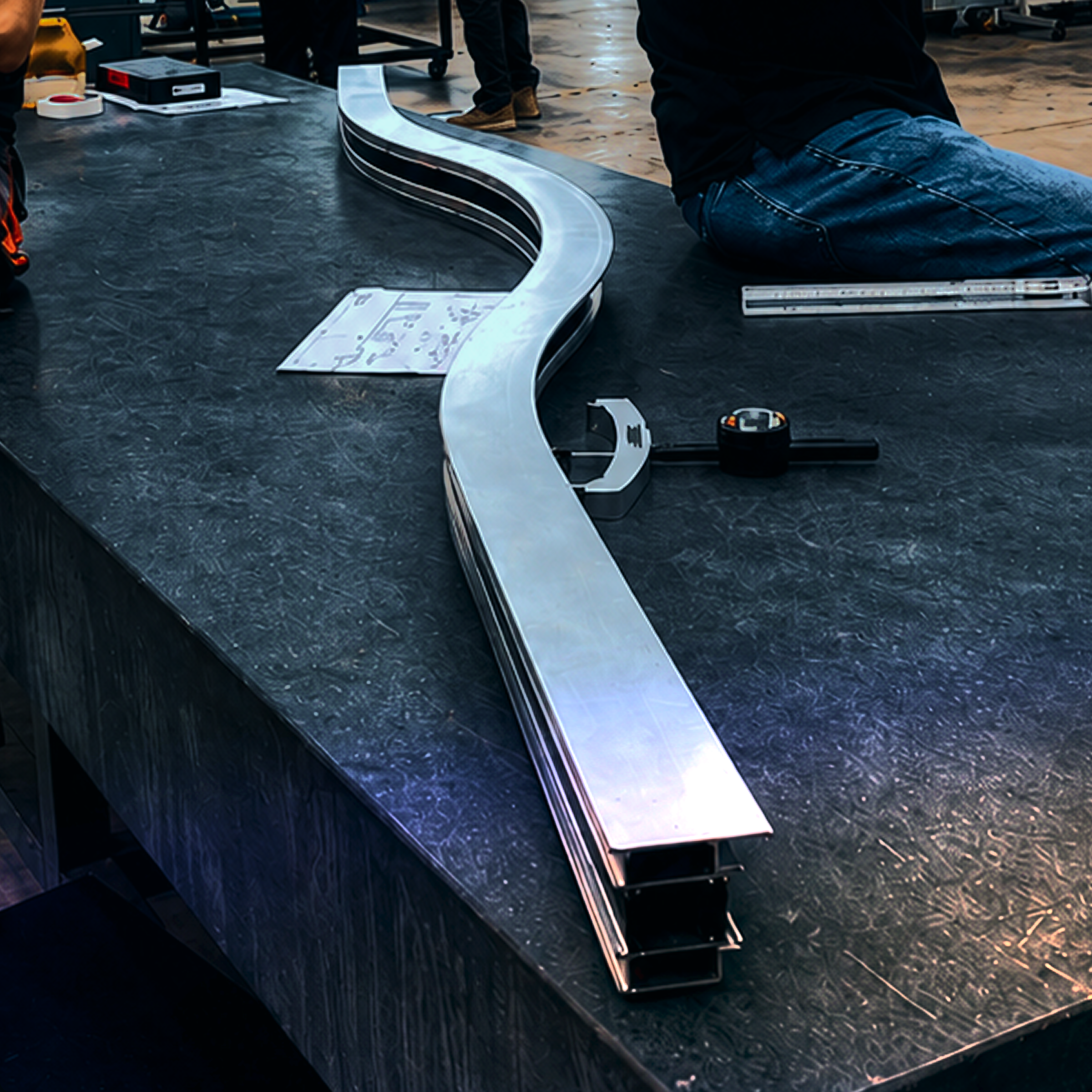
Alubend delivers aluminum heat treatment using hot bending, hot rolling, and controlled thermal forming processes.

Thermal Forming Solutions for Aluminum Projects
Alubend applies heat during forming cycles. Using this method, we are able to reduce internal stress and allow consistent deformation.
This method applies to hardened aluminum grades and large cross-section profiles where cold forming could result in cracking or spring-back. As such, each forming cycle is calibrated based on the alloy and geometry.
We are capable of supporting:
- Hot bending for aluminum pipe and tube in transport and infrastructure
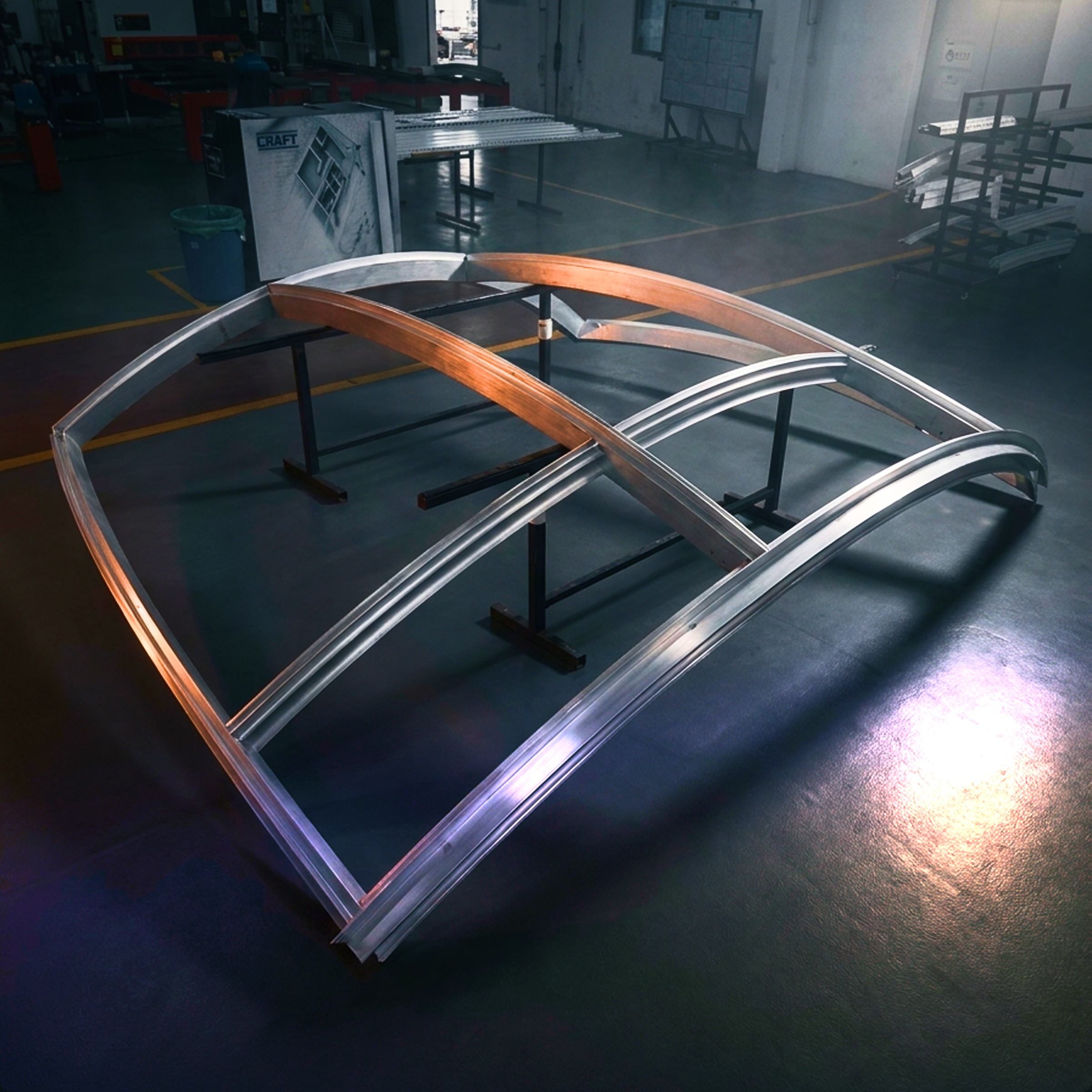
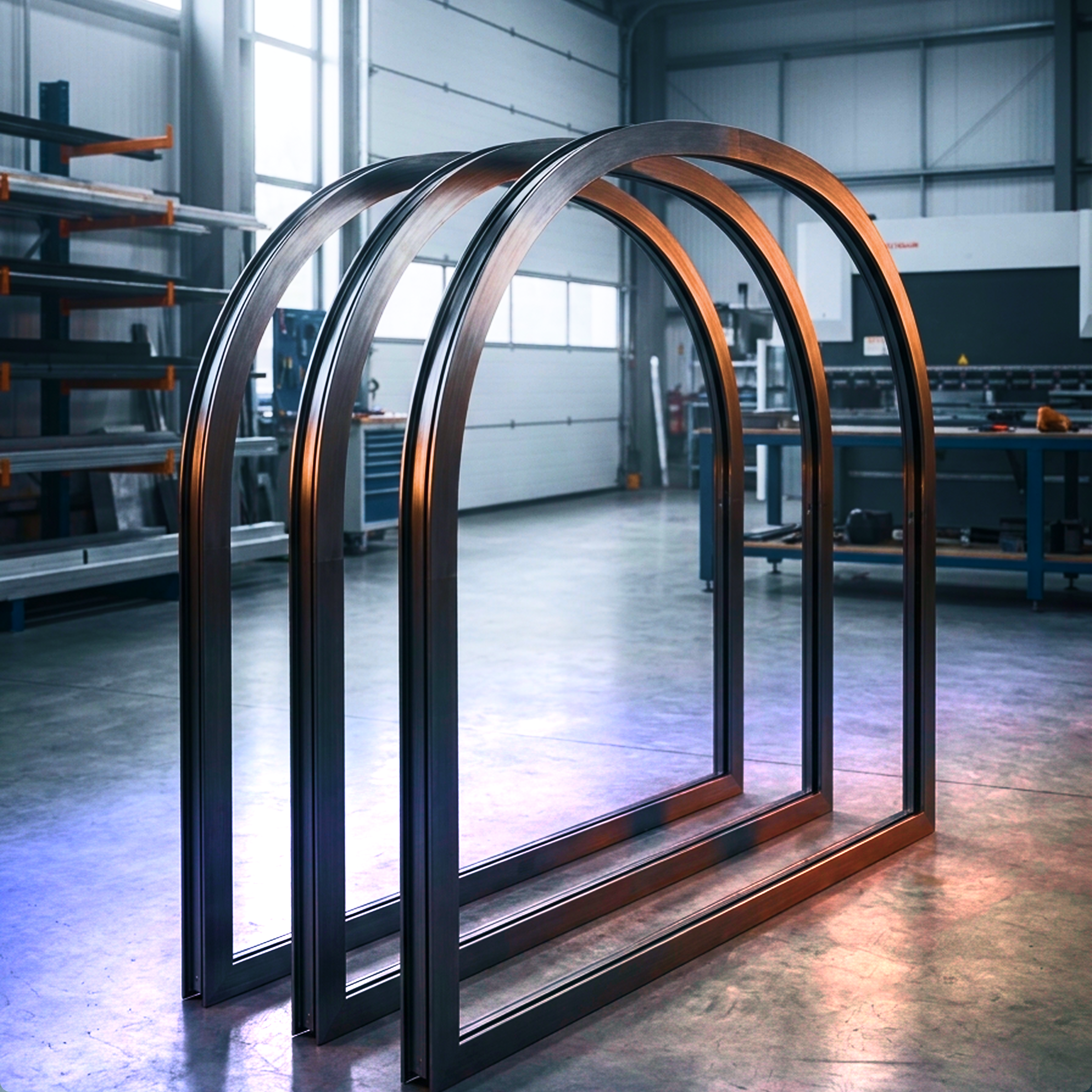
- Thermal shaping for extruded aluminum frames in construction projects
- Hot rolling services for curved profiles that require tight dimensional tolerances
- Heat-formed components shaped to specification for structural assemblies
Heat-formed bends match the profile specifications and reduce the need for post-forming adjustments.

Strength
Parts
Treatment Profiles
Wear Resistance
Try Our Bending Calculator


All-In-One Solution
Alubend provides a comprehensive bending service, offering everything from design consultation to final product delivery, ensuring seamless execution for all your aluminum bending needs.

Quality Promise

Reporting
Alubend offers detailed, transparent reporting on every project, providing clients with clear insights into progress, specifications, and final outcomes for full confidence in our services.
Our Works In Motion
Explore how we’ve delivered custom bending solutions across industries, bringing innovation and functionality to every design.


Frequently Asked Questions
What i the best aluminium temper for bending?
It has a slightly higher strength than O-temper, but it is still relatively easy to bend. T4 temper is also a good choice for bending because it has good dimensional stability. This means that it is less likely to warp or twist after bending.
It is important to note that the best temper for bending will also depend on the thickness and size of the aluminum. For thicker or larger pieces, it may be necessary to use a higher strength temper. It is also important to use the correct bending radius for the material. Bending too sharply can cause the aluminum to crack.
Here are some tips for bending aluminum:
- Use a bending radius that is at least twice the thickness of the aluminum.
- Use a sharp bending tool.
- Bend the aluminum slowly and carefully.
- Do not bend the aluminum too sharply.
- If the aluminum starts to crack, stop bending and try again with a larger bending radius.
Can you bend T6 Aluminium?
To bend T6 aluminum without cracking it, it is important to use a large enough bending radius. The bending radius should be at least twice the thickness of the aluminum. It is also important to bend the aluminum slowly and carefully. Do not try to bend the aluminum too sharply, as this can cause the material to crack.
Can curved components be tempered?
To avoid cracking or breaking curved components during tempering, it is important to use a slow cooling rate. This can be done by using a furnace with a controlled cooling rate or by air cooling the material. It is also important to use a tempering temperature that is appropriate for the material. Overheating the material can cause it to lose its strength and ductility.
Can curved aluminium be structural?
- Building facades
- Roofing
- Bridges
- Aircraft
- Ships
- Wind turbines
Curved aluminium is a strong and lightweight material that is well-suited for structural applications. It is also resistant to corrosion and requires little maintenance, making it a cost-effective choice for long-term use.
When used in structural applications, curved aluminium is typically made from high-strength alloys that have been heat treated to increase their strength and durability. The aluminium is also often coated with a protective finish to prevent corrosion.
Curved aluminium can be used to create a variety of structural shapes, including arches, domes, and cylinders. It can also be used to create complex structures with curved surfaces.
The use of curved aluminium in structural applications is growing as architects and engineers look for new ways to create lightweight, sustainable, and aesthetically pleasing structures.
 Previous