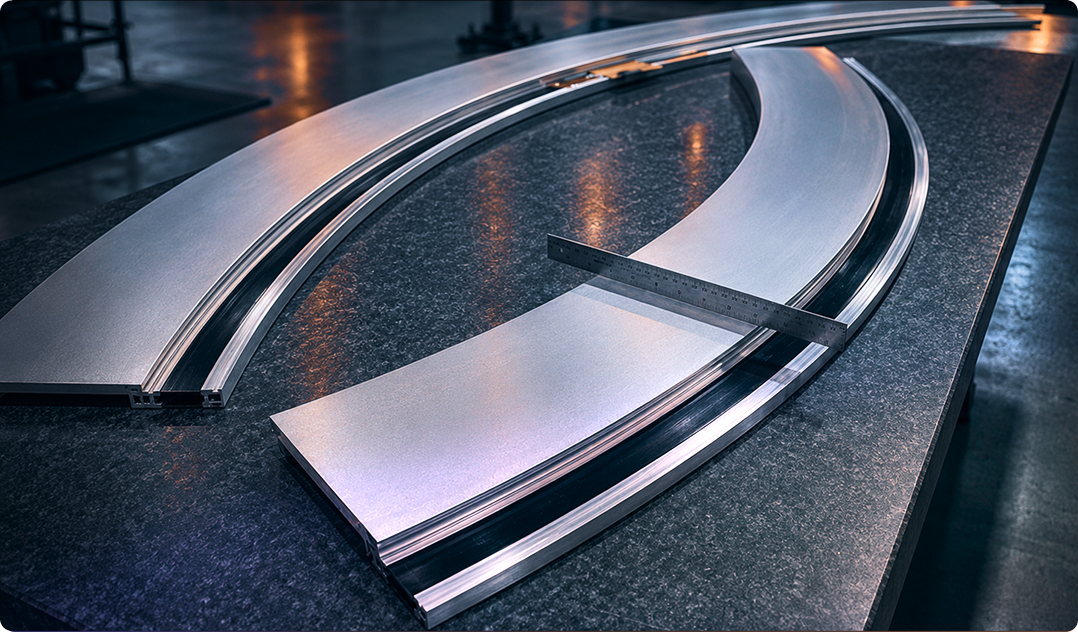

Bending Components for the Construction Industry
Aluminum profiles are widely used in the construction industry. Aluminum’s strength, low density, corrosion resistance, and design flexibility make it an ideal material for structural applications—from louvre blades and solar shading to structural supports in roofing systems. About half of all aluminium profiles produced in the UK are used in the construction industry.
- Commercial windows
- Shopfronts
- Partitioning
- Curtain walling
- Patent glazing
- Conservatories
- Glasshouses
- Roofing
- Scaffolding
- Road furniture and signs
- Architectural hardware
- Heating and ventilation
- Expansion joints
- Car park barriers
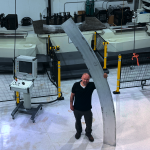
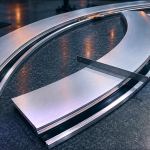
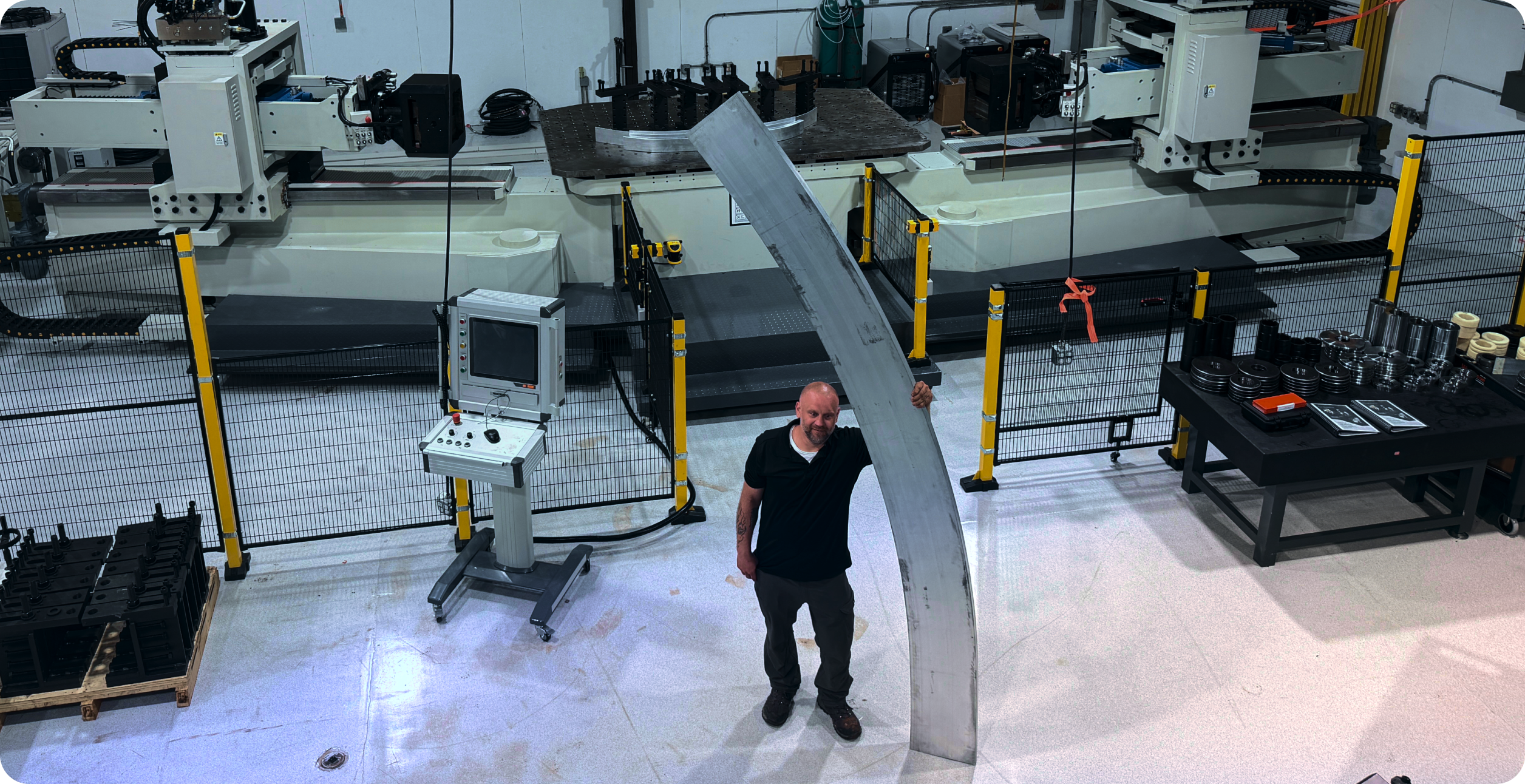
We use curved aluminium profiles in construction, architecture, transportation, and engineering, as well as in consumer products such as lighting solutions. Integrating these contours into a building gives designers more creative freedom. However, there are a few things to consider before designing a curved aluminum profile.
Effect of Additional Features on Curved Construction Components

Consider how features such as snap connections, threaded channels, and heat sinks—which can simplify production and assembly—can affect the bending process.
For example, since the thickness of different parts of the extrusion affects the bendability of the cross-section, a uniform wall thickness offers advantages in both extrusion and bending. Symmetry also helps—aim to design profiles as symmetrical as possible.
Profiles with wall thicknesses from 2 to 15 mm can be bent with radii as small as 300 mm. However, bending possibilities vary by profile and must be considered individually.
Curved Aluminium Windows
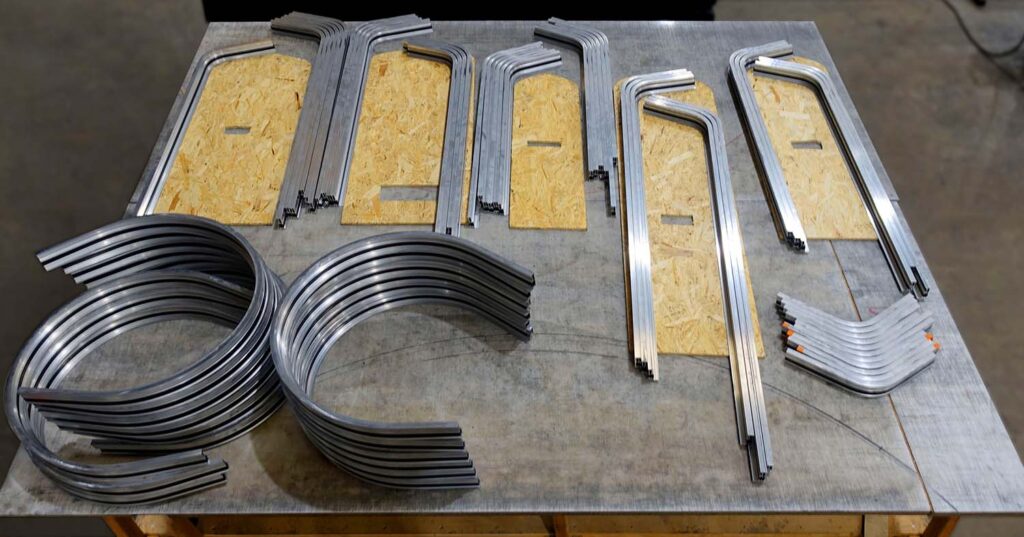
The window market has grown and diversified. The high strength and low overall weight of aluminum extrusion profiles make them suitable for a variety of window styles. These profiles are thinner than wood or UPVC without compromising safety, security, or durability.
In public housing, many local authorities specify aluminium as an alternative to wood or steel because it can be used in various styles while maintaining the integrity of anything from high-rise apartments to heritage buildings. Other advantages include minimal maintenance and high resistance to vandalism and fire damage.
Formed Aluminium Facades
The Council of Aluminium Bending recently posted an excellent article about the use of aluminium in facades and other construction applications.
Aluminium, strong and very light, works perfectly with glass to create a building envelope. Glazing with an aluminium support structure can be easy to clean and maintain with good weathering characteristics. Correctly designed, it can offer unpowered natural ventilation, harness solar energy for heating, and provide insulation and shading—keeping building occupants comfortable all year round.
You can read more here.
Contact Us for More Information
Our team is dedicated to providing the best possible service through our full range of in-house capabilities, including:
- Premium Aluminium Bending Services
- Coded & Certified In-house Welding
- 3 and 5-Axis Machining Centres
- High Capacity Heat Treatment Oven
- CMM 3D Scanning, Probing, and Reporting
- And several additional in-house services
Get in touch to find out what we can do for you.